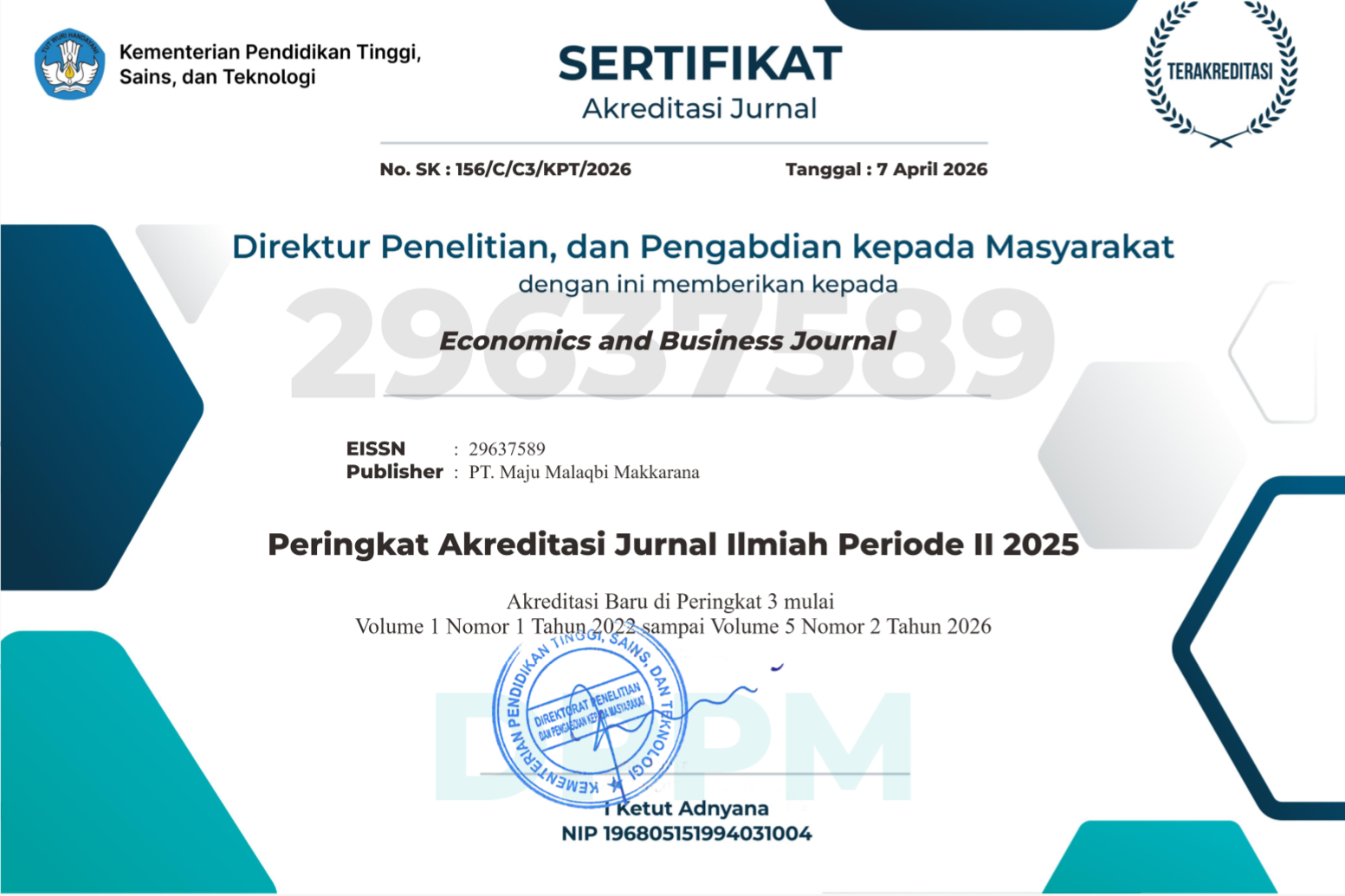

Mapping Multi-Sensory Brand Experiences and Their Impact on Customer Satisfaction: A Bibliometric and Systematic Literature Review on Scopus
Published:
2025-05-17Downloads
Abstract
Multi-sensory brand experience has emerged as a crucial factor in modern marketing, significantly influencing customer satisfaction, brand perception, and loyalty. Despite its increasing importance, research in this area remains fragmented, with theoretical integration and empirical validation gaps. This study employs a Systematic Literature Review (SLR) and bibliometric analysis using the Scopus database to map the evolution of research on multi-sensory brand experiences and their impact on customer satisfaction. From an initial dataset of 203 documents, a rigorous selection process resulted in 41 relevant articles for in-depth analysis. Using VOS viewer, the study visualizes research networks, inter-topic relationships, and emerging trends, revealing a 47% increase in publication volume from 2012 to 2024.
Findings indicate that customer satisfaction, consumer behaviour, and sales are dominant themes, with sentiment analysis and digital technology (AI, AR) gaining traction in recent years. However, significant gaps remain, particularly in experimental studies quantifying the long-term impact of multi-sensory experiences on customer loyalty and cross-industry comparisons of multi-sensory branding effectiveness. The novelty of this study lies in its combined bibliometric and systematic approach, which identifies critical research trends, theoretical gaps, and emerging digital strategies in multi-sensory marketing. This study contributes to the academic discourse by comprehensively synthesizing research trends and proposing future research directions in technology-driven branding strategies and consumer engagement.
Keywords:
Positioning Consumer Satisfaction Systematic Literature Review (SLR)References
vom Lehn, D., Heath, C. (2016). Action at the exhibit face: Video and the analysis of social interaction in museums and galleries. Journal of Marketing Management, 32(15-16), 1441-1457. https://doi.org/10.1080/0267257X.2016.1188846
Yao, L., Zheng, N. (2024). Sentiment Analysis Based on Improved Transformer Network and Its Application to Consumer Review Mining. IEEE Access, 12, 90145-90157. https://doi.org/10.1109/ACCESS.2024.3418847
Powell, C. M. (2016). Twelve Years in the Life of Airline Websites. SAGE Open, 6(2). https://doi.org/10.1177/2158244016637892
Anaza, N. A., Luis Saavedra, J., Hair, J. F., Bagherzadeh, R., Rawal, M., Osakwe, C. N. (2021). Customer-brand disidentification: Conceptualization, scale development and validation. Journal of Business Research, 133, 116-131. https://doi.org/10.1016/j.jbusres.2021.03.064
Keerthana, D., Joy, G. V. (2024). AR-Induced Consumer Experience in Hybrid Retail: Examining the Role of Immersive Technology in Purchase Intentions. International Research Journal of Multidisciplinary Studies, 5(4), 1151-1169. https://doi.org/10.47857/irjms.2024.v05i04.01362
Mehraliyev, B., Kirilenko, A. P., Choi, Y. (2020). From measurement scale to sentiment scale: Examining the effect of sensory experiences on online review rating behavior. Tourism Management, 79. https://doi.org/10.1016/j.tourman.2020.104096
Urdea, M., Constantin, C., Purcaru, I. (2021). Implementing experiential marketing in the digital age for a more sustainable customer relationship. Sustainability (Switzerland), 13(4), 1-17. https://doi.org/10.3390/su13041865
Rashid, T., Hasan, M., Hasan, A. (2024). A comprehensive dataset for sentiment and emotion classification from Bangladesh e-commerce reviews. Data in Brief, 53. https://doi.org/10.1016/j.dib.2024.110052
Zha, L., Marvi, S., Foroudi, P. (2023). Synthesizing the customer experience concept: A multimodularity approach. Journal of Business Research, 167. https://doi.org/10.1016/j.jbusres.2023.114185
Setiawan, B., Wibisono, S., Purwanegara, M. S. (2022). Defining event marketing as engagement-driven marketing communication. Gadjah Mada International Journal of Business, 24(2), 151-177. https://doi.org/10.22146/gamaijb.63788
Tomar, P., De, R., Prasad, R., Soni, A. (2022). A conceptual model for building the relationship between augmented reality, experiential marketing & brand equity. International Journal of Professional Business Review, 7(6). https://doi.org/10.26668/businessreview/2022.v7i6.1030
Kharabsheh, B., Al-Shammari, T., Bataineh, M. (2023). Research on corporate social responsibility: Insights and future directions. Administrative Sciences, 13(2). https://doi.org/10.3390/admsci13020064
Wang, J., Wang, X., Wei, L., Xu, Y., Cavender, J. (2025). Advances in yogurt development—Microbiological safety, quality, functionality, sensory evaluation, and consumer perceptions. Journal of Dairy Science, 108(1), 33-58. https://doi.org/10.3168/jds.2024-25322
Huo, Y., Yao, J., Li, C., Wu, H. (2025). Economic vs. ecological benefit for organic food: The role of perceived values in online consumer reviews. Frontiers in Sustainable Food Systems, 9. https://doi.org/10.3389/fsufs.2025.1469869
Kini, S., Basri, R. (2023). Customer empowerment and engagement behaviors influencing value for FinTech customers: An empirical study from India. Organizations and Markets in Emerging Economies, 14(1), 83-109. https://doi.org/10.15388/omee.2023.14.83
Montossi, F., Font-i-Furnols, M., del Campo, M., San Julián, R. (2013). Sustainable sheep production and consumer preference trends. Meat Science, 95(4), 772-789. https://doi.org/10.1016/j.meatsci.2013.04.048
Wu, L., Gao, Z. (2019). Understanding emotional customer experience and co-creation behaviors in luxury hotels. International Journal of Contemporary Hospitality Management, 31(11), 4247-4275. https://doi.org/10.1108/IJCHM-04-2018-0302
Rajendran, P. (2023). Revolutionizing digital marketing: Unveiling the impact of influencer marketing, AI-driven customer support, and voice search optimization. Economic Annals-XXI, 205(9-10), 50-56. https://doi.org/10.21003/ea.V205-06
Singh, R., Raghuwanshi, S., Sharma, T. (2023). Modeling the nexus between perceived value, risk, and consumer trust with social cross-platform buying behavior. Journal of Law and Sustainable Development, 11(4). https://doi.org/10.55908/sdgs.v11i4.488
Jiménez-Marín, G., Alvarado, C., González-Oñate, C. (2022). Application of sensory marketing techniques at Marengo, a small sustainable men’s fashion store in Spain. Sustainability (Switzerland), 14(19). https://doi.org/10.3390/su141912547
Bellar, W., Baina, S., Ballafkih, H. (2024). Sentiment Analysis: Predicting Product Reviews for E-Commerce Recommendations Using Deep Learning and Transformers. Mathematics, 12(15). https://doi.org/10.3390/math12152403
Nguyen, H., Nguyen, T. (2023). Understanding customer experience with Vietnamese hotels by analyzing online reviews. Humanities and Social Sciences Communications, 10(1). https://doi.org/10.1057/s41599-023-02098-8
Chaney, D., Lunardo, R., Mencarelli, R. (2018). Consumption experience: past, present and future. Qualitative Market Research, 21(4), 402-420. https://doi.org/10.1108/QMR-04-2018-0042
Al-Issa, M., Thanasi, T. (2024). Mapping the Future of Tech-Infused Luxury: A Roadmap and Research Directions. International Journal of Consumer Studies, 48(6). https://doi.org/10.1111/ijcs.13103
Meneses, J., Brito, L., Lopes, A., Correia, M. (2025). Satisfaction and Dissatisfaction in Wine Tourism: A User-Generated Content Analysis. Tourism and Hospitality Research, 25(1), 120-134. https://doi.org/10.1177/14673584231191989
Liu, Y., Ellies‐Oury, M., Stoyanchev, M., Hocquette, J. (2022). Consumer Perception of Beef Quality and How to Control, Improve and Predict It? Focus on Eating Quality. Foods, 11(12). https://doi.org/10.3390/foods11121732
Oliveira, P., Brochado, A., Moro, S., Rita, P. (2019). Consumer perception of tourist experience through online reviews: The islands of the senses of Cape Verde. Worldwide Hospitality and Tourism Themes, 11(6), 696-717. https://doi.org/10.1108/WHATT-09-2019-0052
Blut, M., Iyer, G. (2020). Consequences of Perceived Crowding: A Meta-Analytical Perspective. Journal of Retailing, 96(3), 362-382. https://doi.org/10.1016/j.jretai.2019.11.007
Mozu, M., Marfo, P., Opare-Addo, J., Adomako, C. (2024). Perspectives and Satisfaction of Consumers with Hypertension and Diabetes on Services Provided by Community Pharmacy. Journal of Patient Experience, 11. https://doi.org/10.1177/23743735241261237
Bucy, M., Mulcahy, S., Shippee, A., Fashaw-Walters, S. (2023). Examining Satisfaction and Quality in Home- and Community-Based Service Programs in the United States: A Scoping Review. Gerontologist, 63(9), 1437-1455. https://doi.org/10.1093/geront/gnad003
Filieri, R., Lin, Z., Li, G., Lu, Y., Yang, Z. (2022). Customer Emotions in Service Robot Encounters: A Hybrid Machine-Human Intelligence Approach. Journal of Service Research, 25(4), 614-629. https://doi.org/10.1177/10946705221103937
Akhavannasab, S., Dantas, D. C., Senecal, S., Grohmann, B. (2022). Consumer power: scale development and validation in consumer–firm relationships. European Journal of Marketing, 56(5), 1337-1371. https://doi.org/10.1108/EJM-08-2019-0652
Delcourt, C., Gremler, D. D., van Riel, A. C., van Birgelen, M. (2016). Employee Emotional Competence: Construct Conceptualization and Validation of a Customer-Based Measure. Journal of Service Research, 19(1), 72-87. https://doi.org/10.1177/1094670515590776
Kim, H., Park, M., Marjerison, R. (2024). Usefulness of Online Reviews of Sensory Experiences: Pre- vs. Post-Pandemic. Journal of Theoretical and Applied Electronic Commerce Research, 19(2), 1471-1492. https://doi.org/10.3390/jtaer19020073
Brdar, M. (2023). Mind Over Palate: Unveiling the Role of Neuromarketing in the Food Industry. Meat Technology, 64(1), 50-60. https://doi.org/10.18485/meattech.2023.64.1.5
Taube, O., Warnaby, G. (2017). How brand interaction in pop-up shops influences consumers’ perceptions of luxury fashion retailers. Journal of Fashion Marketing and Management, 21(3), 385-399. https://doi.org/10.1108/JFMM-08-2016-0074
Ghorbani, A., Karampela, M., Tonner, C. (2022). Consumers’ brand personality perceptions in a digital world: A systematic literature review and research agenda. International Journal of Consumer Studies, 46(5), 1960-1991. https://doi.org/10.1111/ijcs.12791
Jiménez-Marín, G., Alvarado, C., González-Oñate, C. (2022). Application of Sensory Marketing Techniques at Marengo, a Small Sustainable Men’s Fashion Store in Spain. Sustainability (Switzerland), 14(19). https://doi.org/10.3390/su141912547
Bucy, M., Mulcahy, S., Shippee, A., Fashaw-Walters, S. (2023). Examining Satisfaction and Quality in Home- and Community-Based Service Programs in the United States: A Scoping Review. Gerontologist, 63(9), 1437-1455. https://doi.org/10.1093/geront/gnad003
Colson, G., Rousu, M. C. (2013). What do consumer surveys and experiments reveal and conceal about consumer preferences for genetically modified foods? GM Crops & Food, 4(3), 158-165. https://doi.org/10.4161/gmcr.26322
Meneses, J., Brito, L., Lopes, A., Correia, M. (2025). Satisfaction and Dissatisfaction in Wine Tourism: A User-Generated Content Analysis. Tourism and Hospitality Research, 25(1), 120-134. https://doi.org/10.1177/14673584231191989
License
Copyright (c) 2025 kevin, Budi, ludi

This work is licensed under a Creative Commons Attribution-ShareAlike 4.0 International License.
Downloads
How to Cite