
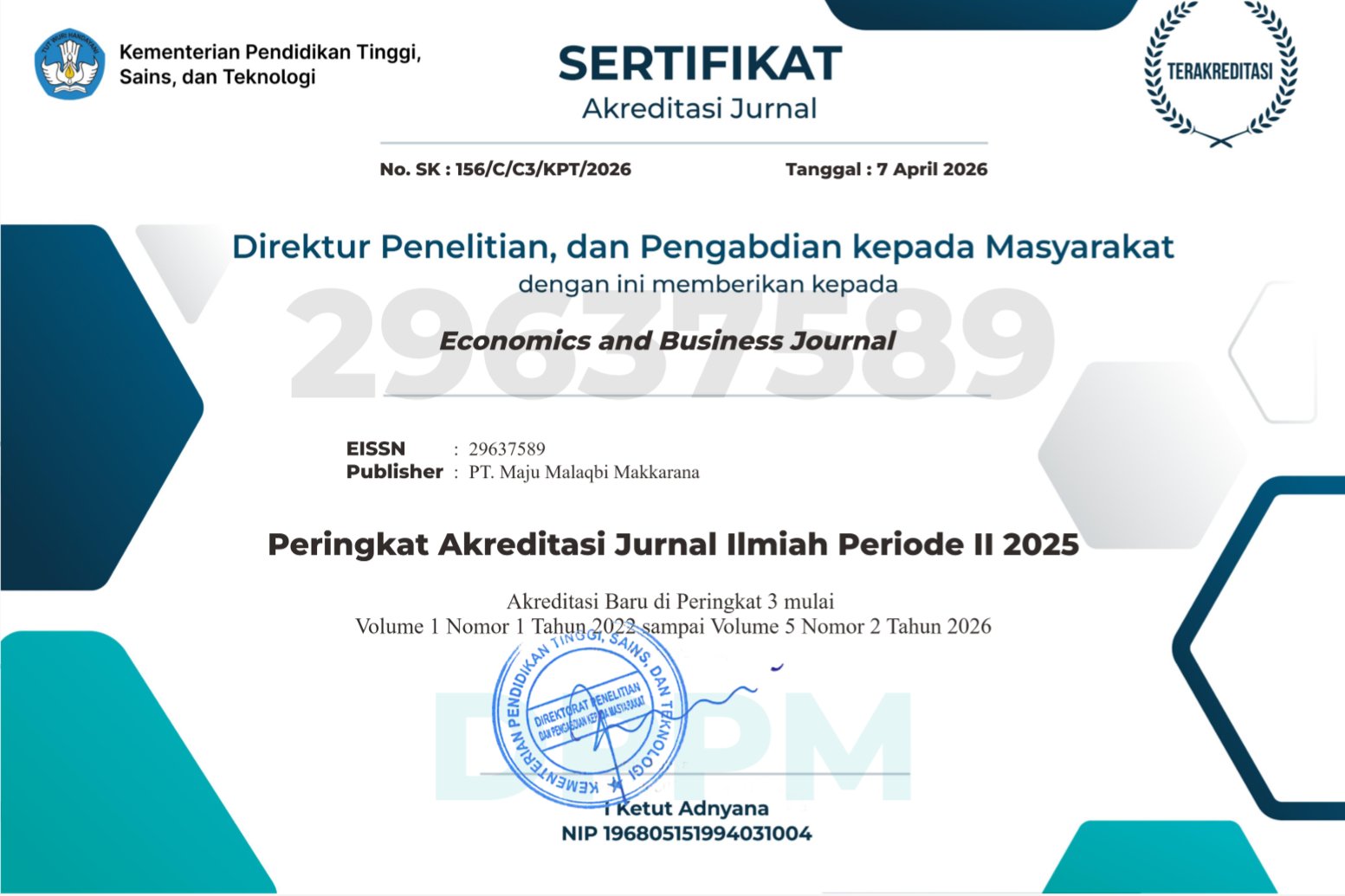

The Economics and Business Journal (ECBIS) publishes original scholarly contributions that advance knowledge, theory, and practice in economics, business, management, and related disciplines. The journal welcomes manuscripts that demonstrate academic rigor, methodological transparency, theoretical relevance, and practical or policy implications.
ECBIS considers the following types of manuscripts for publication.
Original Research Articles report previously unpublished empirical or theoretical research that contributes new knowledge to economics, business, management, and related fields. These manuscripts should present a clearly defined research problem, relevant theoretical foundations, appropriate research methods, systematic analysis, and conclusions supported by the findings.
Empirical studies may employ quantitative, qualitative, or mixed-methods approaches. Submissions should explain their research design, data sources, analytical procedures, and limitations sufficiently to support scholarly evaluation and reproducibility where applicable.
Review Articles critically examine and synthesize existing literature on a specific topic within the journal's scope. These manuscripts should provide a clear review objective, transparent literature identification and selection procedures appropriate to the review design, and a substantive synthesis of existing evidence.
ECBIS welcomes systematic literature reviews, scoping reviews, meta-analyses, and other rigorous review approaches. Review articles should identify major research trends, theoretical developments, methodological limitations, unresolved questions, and directions for future research.
Conceptual and Theoretical Articles develop, refine, or critically evaluate concepts, frameworks, models, and theories relevant to economics, business, and management. These manuscripts should establish a clear theoretical contribution, engage critically with relevant scholarship, and explain how the proposed arguments or frameworks advance existing knowledge.
Conceptual submissions must go beyond descriptive summaries of previous studies and demonstrate a coherent, well-supported intellectual contribution.
Case Study Articles provide an in-depth examination of a particular organization, business, industry, market, policy intervention, or economic phenomenon. They should establish a clear analytical focus and use appropriate evidence to explain the context, processes, outcomes, and implications of the case.
Submissions must demonstrate analytical depth and explain the relevance of their findings beyond the individual case where appropriate. Authors are responsible for obtaining any necessary permissions and protecting confidential or identifiable information.
Policy and Practice Papers examine current economic, business, managerial, or organizational issues and develop evidence-based recommendations for policymakers, practitioners, or institutional decision-makers.
These manuscripts should identify a significant practical or policy problem, draw on credible evidence and relevant analytical frameworks, and present clear implications or recommendations. Submissions must maintain academic rigor and provide adequate support for their conclusions.
Short Communications present concise but significant research findings, methodological insights, preliminary evidence, or focused scholarly contributions that warrant timely dissemination. They should address a clearly defined question and provide sufficient methodological and analytical detail to support the claims presented.
Short Communications are expected to make a distinct contribution rather than simply reproduce or summarize findings already reported elsewhere.
Book Reviews critically evaluate recently published academic books relevant to economics, business, management, and related disciplines. A review should summarize the book's central arguments, assess its theoretical and methodological contributions, identify its strengths and limitations, and explain its relevance to researchers, educators, students, or practitioners.
Book Reviews are subject to editorial consideration, and authors should disclose any relevant conflicts of interest.
All manuscripts submitted to ECBIS must:
Fall within the journal's aims and scope.
Represent original scholarly work and comply with applicable publication ethics standards.
Be written in clear academic English.
Provide appropriate citations and references for all sources used.
Disclose relevant funding, conflicts of interest, and research ethics approvals where applicable.
Comply with the journal's manuscript preparation and submission guidelines.
Not be under consideration for publication by another journal at the time of submission.
All submissions are subject to an initial editorial assessment. Manuscripts considered suitable for further evaluation may undergo peer review in accordance with ECBIS editorial policies. Submission does not guarantee acceptance or publication.
Authors are encouraged to consult the journal's current Author Guidelines before preparing and submitting a manuscript.